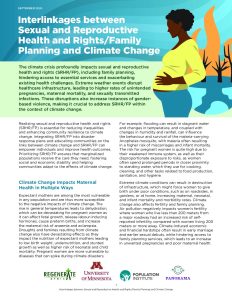

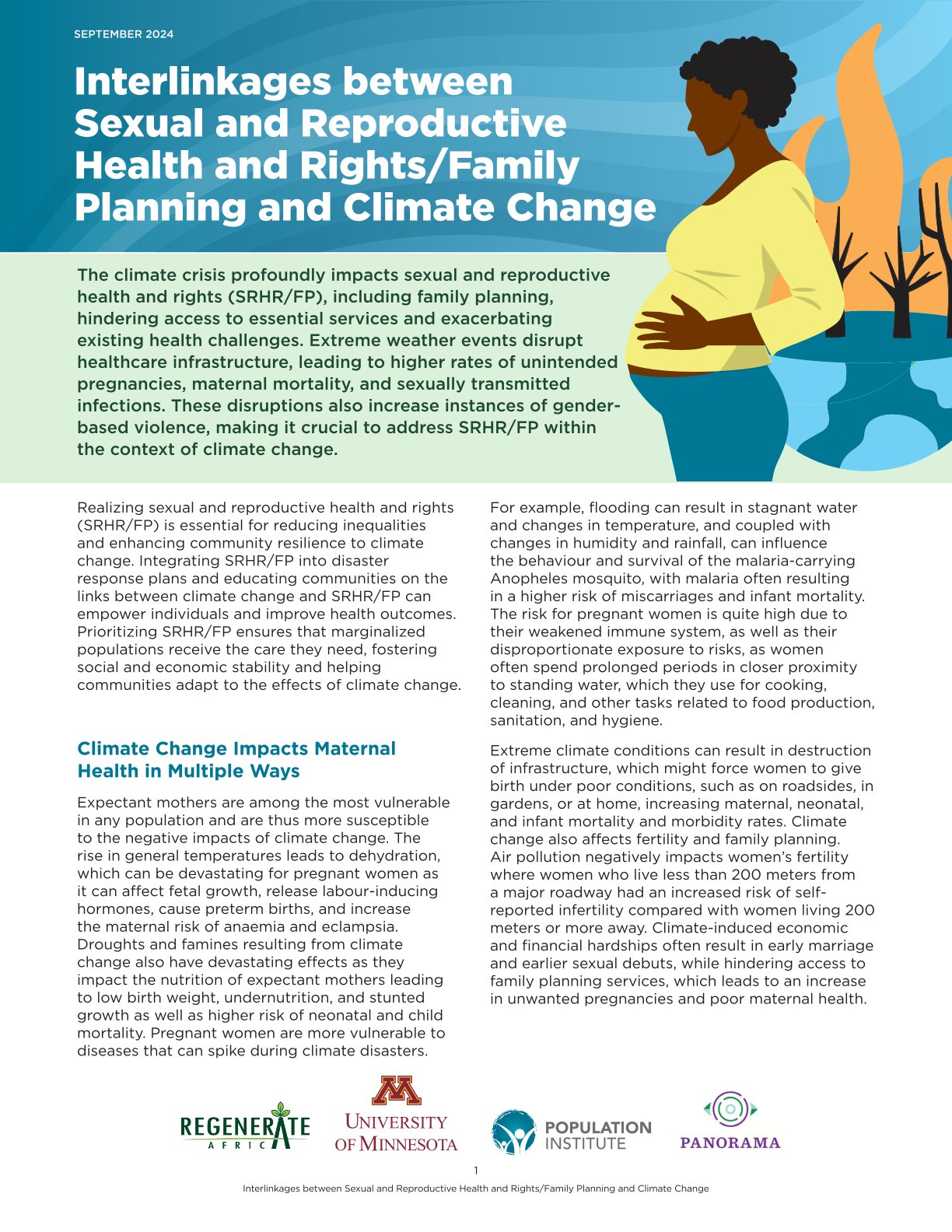
The climate crisis is not just an environmental issue it’s a health and rights issue. Extreme weather events disrupt healthcare systems, limit access to family planning, and heighten risks of maternal mortality, unintended pregnancies, and gender‑based violence.
Expectant mothers, young women, and marginalized communities are disproportionately affected. Rising temperatures, droughts, and floods worsen maternal health outcomes, while damaged infrastructure forces women to give birth in unsafe conditions. Resource scarcity also fuels early marriages, transactional sex, and unsafe practices, deepening vulnerabilities.
This factsheet highlights:
- How climate change impacts maternal health and fertility
- Barriers to integrating SRHR/FP into climate action
- Links between disasters, risky sexual behaviour, and violence
- Policy, program, and health system recommendations for resilience
Explore the full factsheet to see why integrating SRHR/FP into climate strategies is essential for protecting lives and building resilient communities.