

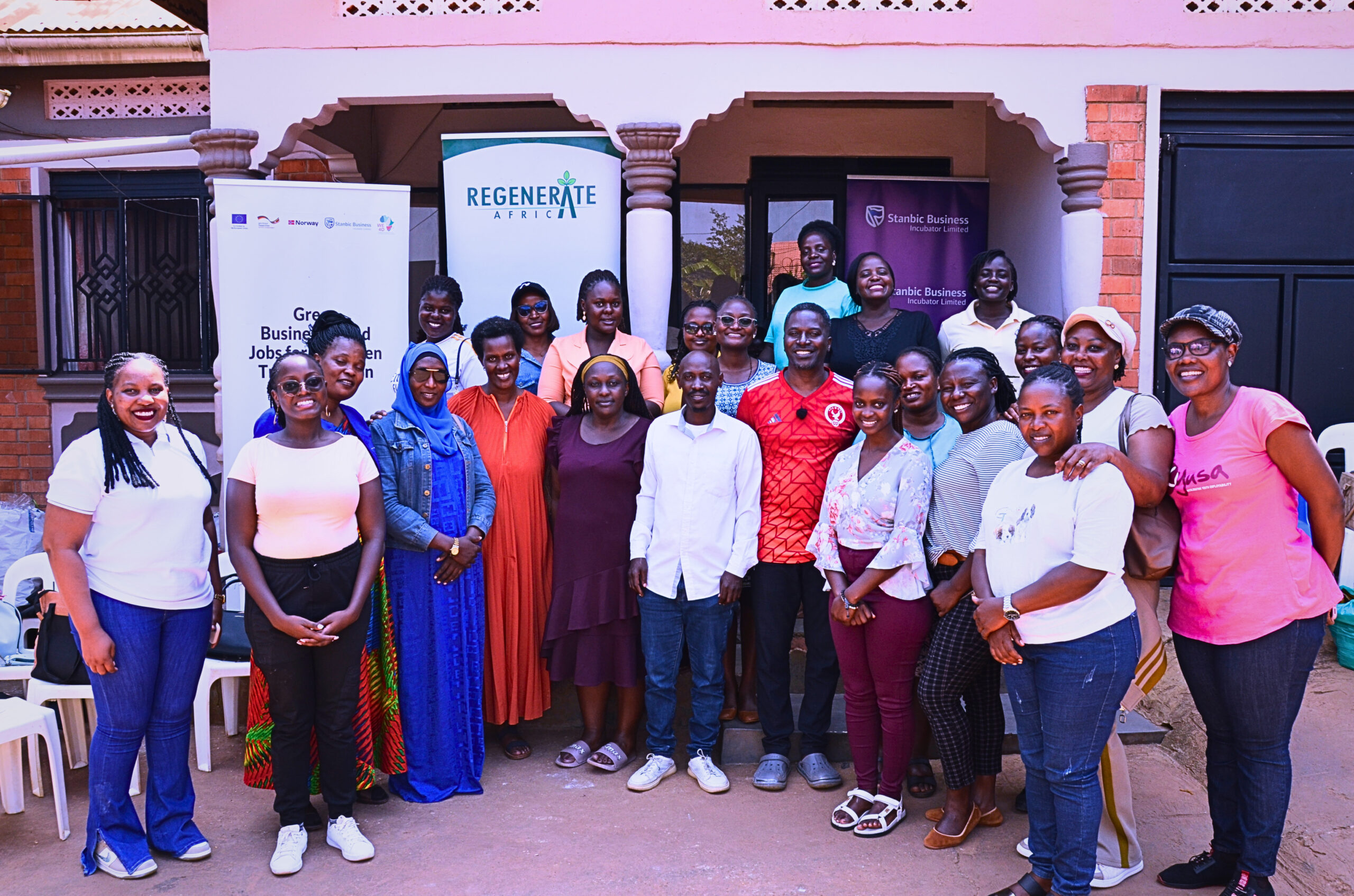
 Group photo at the Mirembe foods visit.
What does it take to build a food business from scratch , in your own backyard with no outstanding funding and still be standing, growing and expanding a decade later?
For John and Diana, the answer is surprisingly straightforward: make a product the market wants, stay compliant and grow at a pace the business can sustain.
Mirembe Foods, Kyengera producers of tomato sauce and chilli sauce was started in 2015 from the family home in Kyegera on a 100 by 50 plot of land where the kitchen doubled as a production floor and th family still lives there. There was no big launch , no investor but just two people who believed in what they were making and were willing to do the unglamorous work of building it properly.
Over ten years later, their tomato and chilli sauces are reaching wholesalers across Uganda, and they are planning their move to a dedicated industrial facility. That is not luck, it is a result of every deliberate choice made along the way.
Green & Sustainable Practices
Mirembe Foods has built sustainability into the way they work as a pr actical necessity.
- Locally sourced raw materials; tomatoes and ingredients are sourced from Ugandan farmers, supporting local agricultural livelihoods.
- Seasonal tomato pulping; they process and preserve tomatoes in bulk during peak harvest when prices are low, reducing waste and protecting against off-season price shocks.
- Energy separation; the production facility runs on a dedicated three-phase electricity line, separate from the household, enabling better energy monitoring and management. Solar energy is being explored to reduce production costs.
- Water conservation; rain water is used for washing; a well supplements national water supply, reducing dependence on piped water for non-food production purposes.
Each of these practices solves a business problem, and the environmental sustainability practices are embedded into the economics and practices so that the business is both profit making, green and sustainable.
Gender & Women in the Workplace
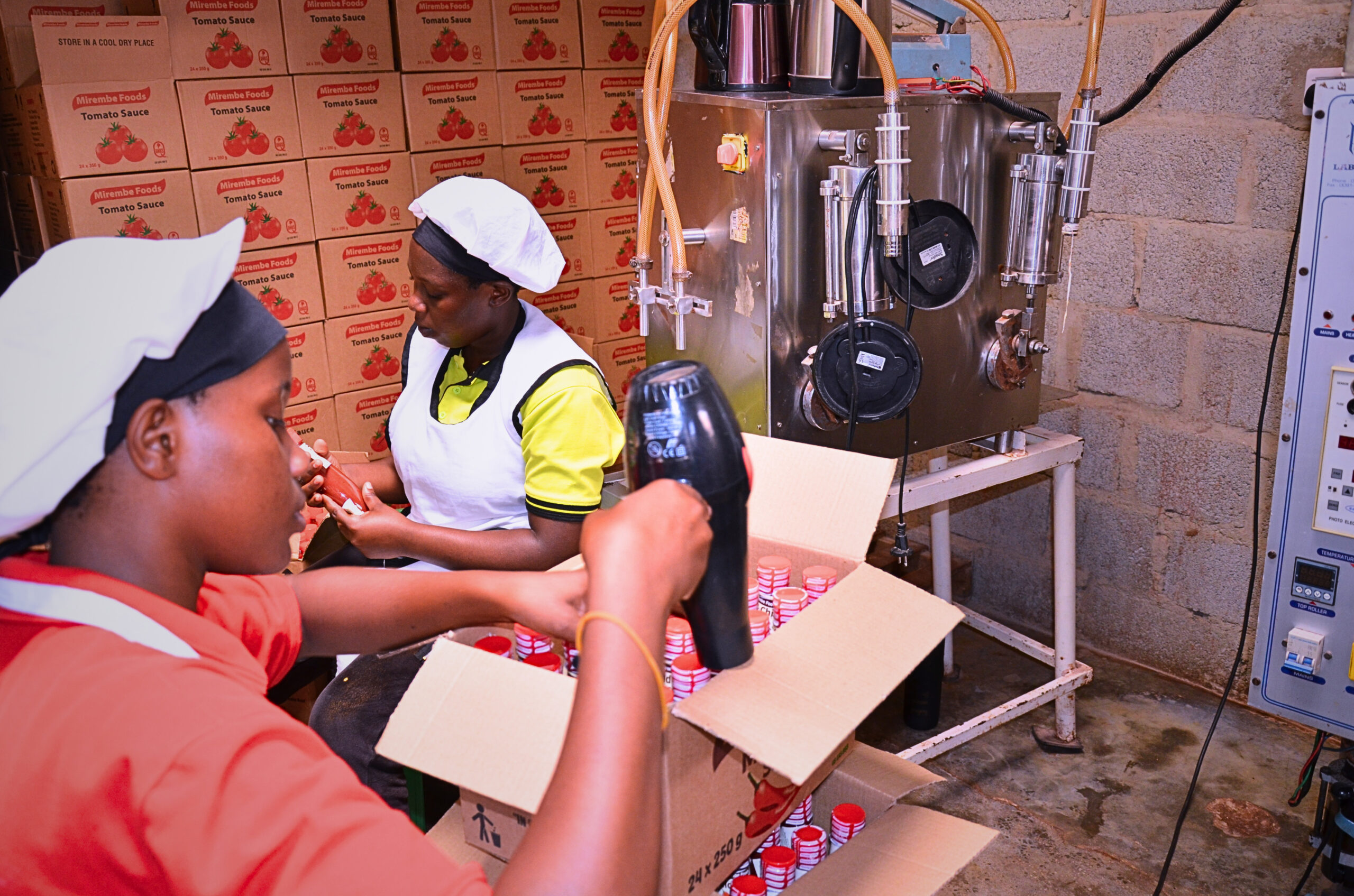 Young women working at the factory
Of Mirembe Foods’ 16 employees, 12 are women. This is not a policy on paper or favoritism. The reality of who shows up, who stays and who drives the production floor every day. Women have proven to be the backbone of the operation: consistent, process-disciplined and committed.
The business itself is co-founded and co-managed by a woman. Diana manages quality control and ingredient management, the most critical function in a food processing business. Mirembe Foods does not simply employ women, but is empowered by them and in return also empowers women.
Compliance as a Competitive Advantage
Mirembe Foods is UNBS-certified. Their message on compliance is clear, “ stop fearing it and start owning it. Audits take 30 minutes when your records are in order. Compliance opens doors, to larger clients, to distribution networks, to financing conversations that would otherwise be out of reach. It is not a cost of doing business, it is an investment in access.”
The Road Ahead
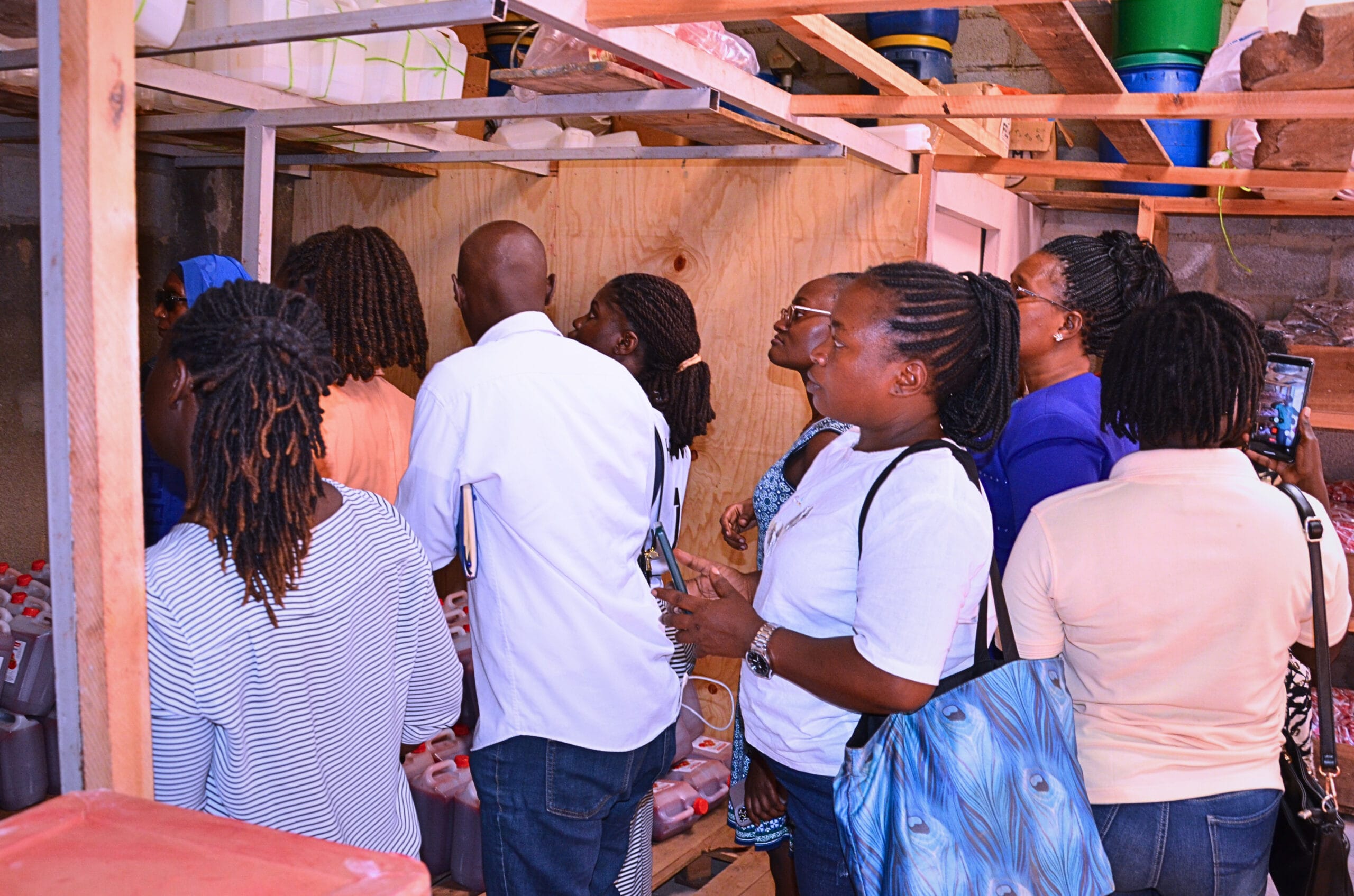 A view at the work processes at the factory.
The next milestone for Mirembe Foods is land. They are saving toward a dedicated industrial site that will fully separate production from the family home, increase production capacity and position the business for the export markets they are already being asked about.They are getting there , at the pace the business can sustain.
Visits like this one are at the heart of the Women -led Green SMEs Capacity Building program by Regenerate Africa in partnership with Stanbic Incubator Limited and giz’s WE4D program. Seeing Mirembe Foods, a green , compliant women led SME built to last is not just instructive for the cohorts, it is proof that the model works and inspires the SMEs to build green sustainable businesses.